From Rubble to Commons.
CHD Park.
Location: Chengdu, China
Year: 2016
Scope: Landscape Design Competition Entry
From Wasteland to Urban Park.
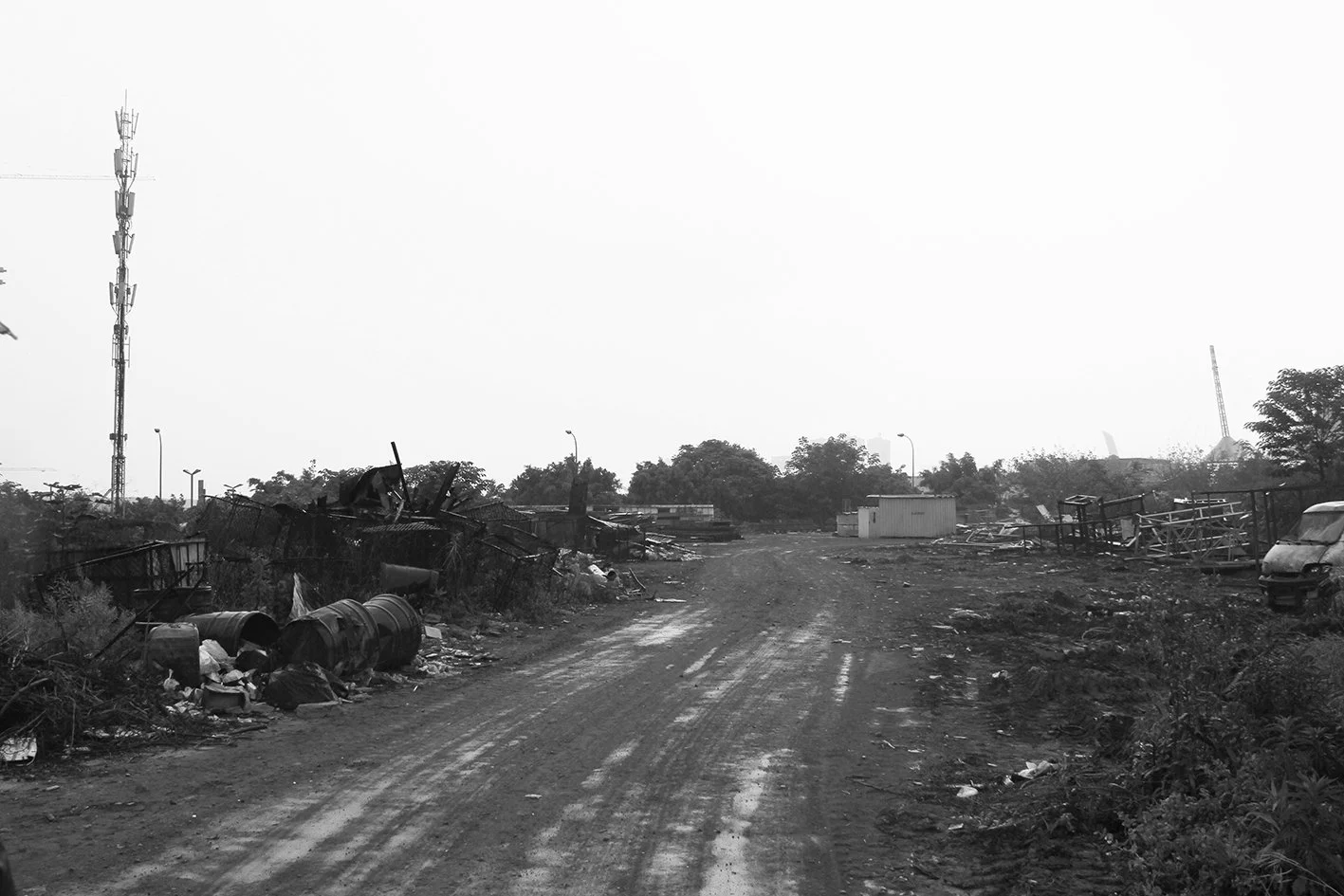
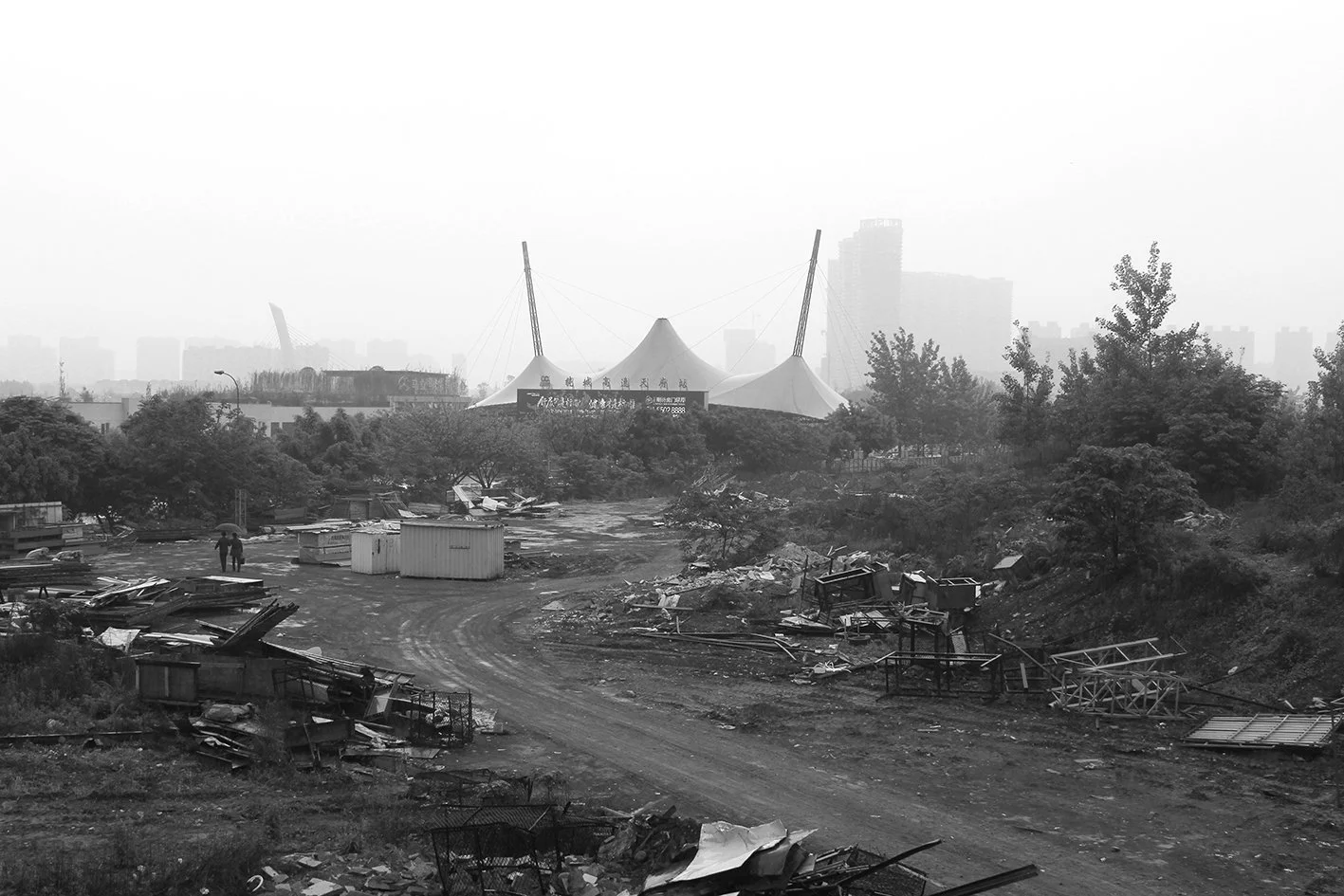
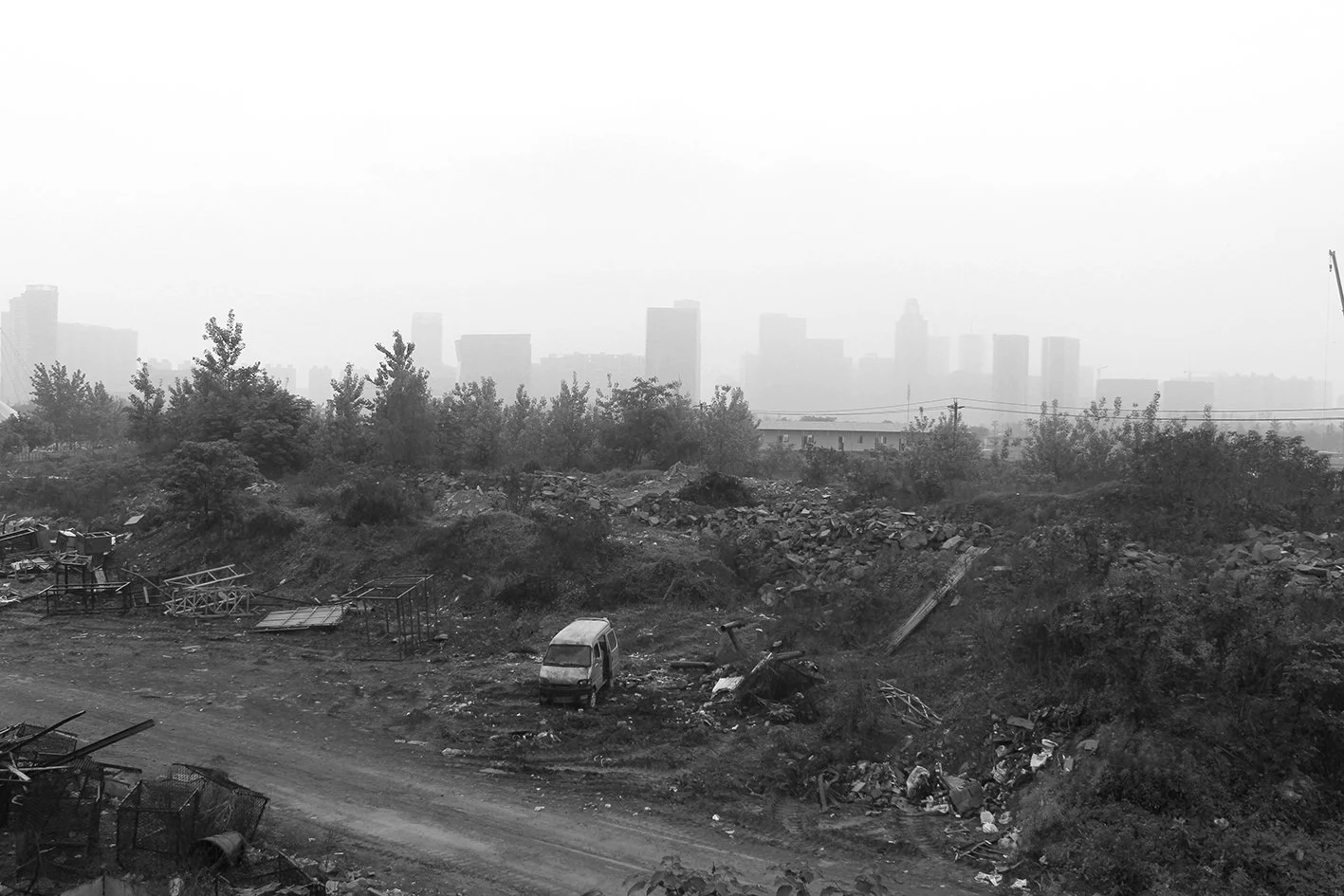
The site arrived as a wound in the city, a large urban brownfield in central Chengdu blanketed in demolition debris, abandoned machinery, and the remnants of informal structures. Misty grey skies pressed down on cleared earth and twisted steel, yet the smudged outlines of mid-rise towers in the background confirmed what the site photography made viscerally clear: this was not a peripheral plot, but a centrally located piece of city that had been left behind. The design strategy begins with that recognition, the gap between what the site was and what the city needed it to become defined every decision that followed.
The proposal is organised around a single connective spine: a continuous public promenade running the full length of the site, linking the city edge to the waterfront. Rather than treating the park as a collection of discrete programme zones, this spine functions as a unifying thread to which different experiences attach, ensuring the park reads as one coherent landscape. Movement is the primary organising principle, a place people pass through daily as part of their routine, not only on special occasions.
The Waterfront Promenade
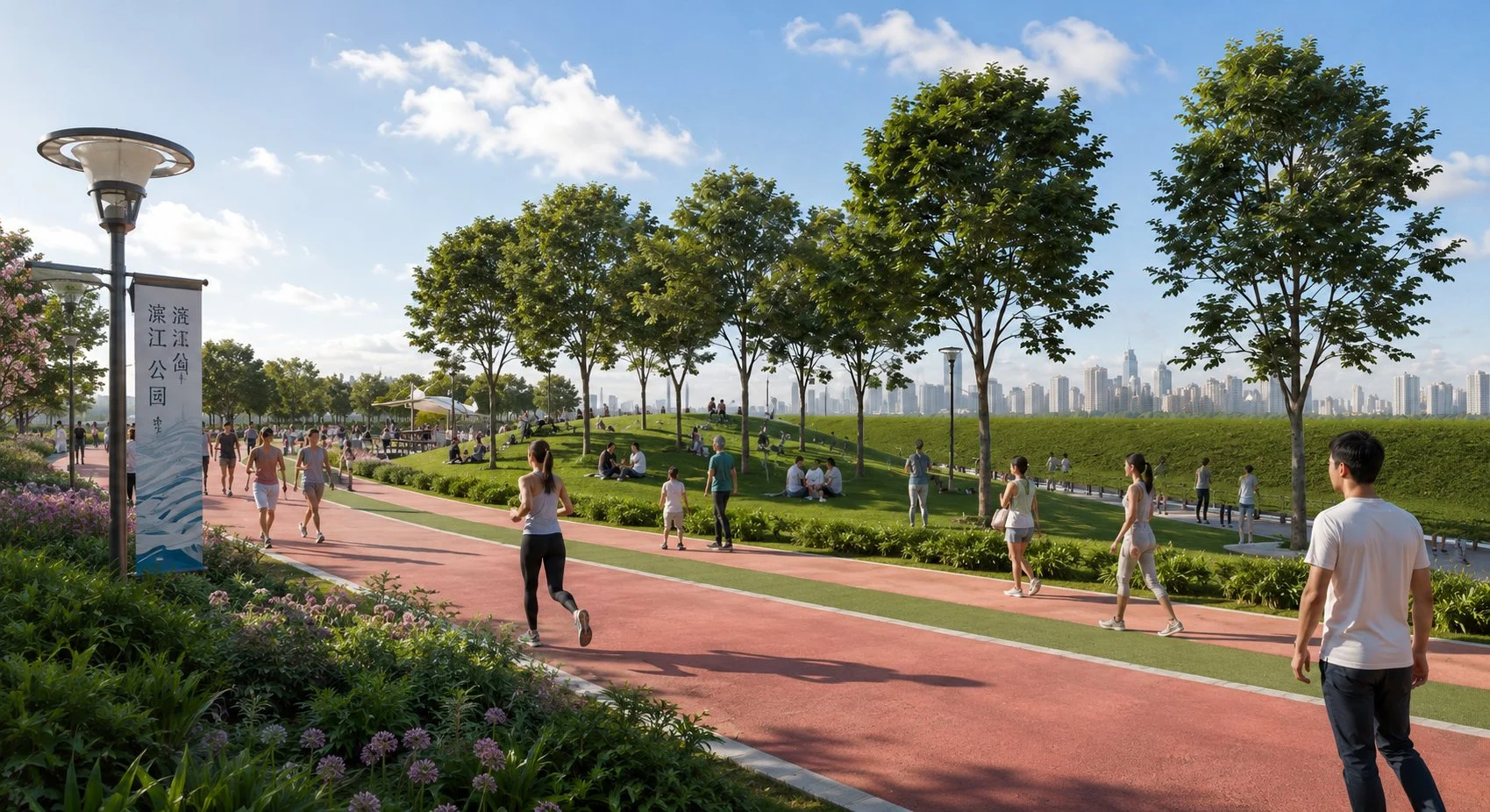
At the waterfront end, the design responds to the scale of the river and the city skyline beyond with generous horizontality: a dedicated running track flanked by wide pedestrian paths, rows of tall deciduous trees forming a continuous canopy, and gently mounded lawn terraces stepping toward the water's edge. The planting here prioritises softness and seasonal change, with layered perennials and flowering ground cover blurring the boundary between path and garden. The terraced lawns are deliberately unscripted — the park does not compete with the river view, it frames and delivers it.
The Festival Axis
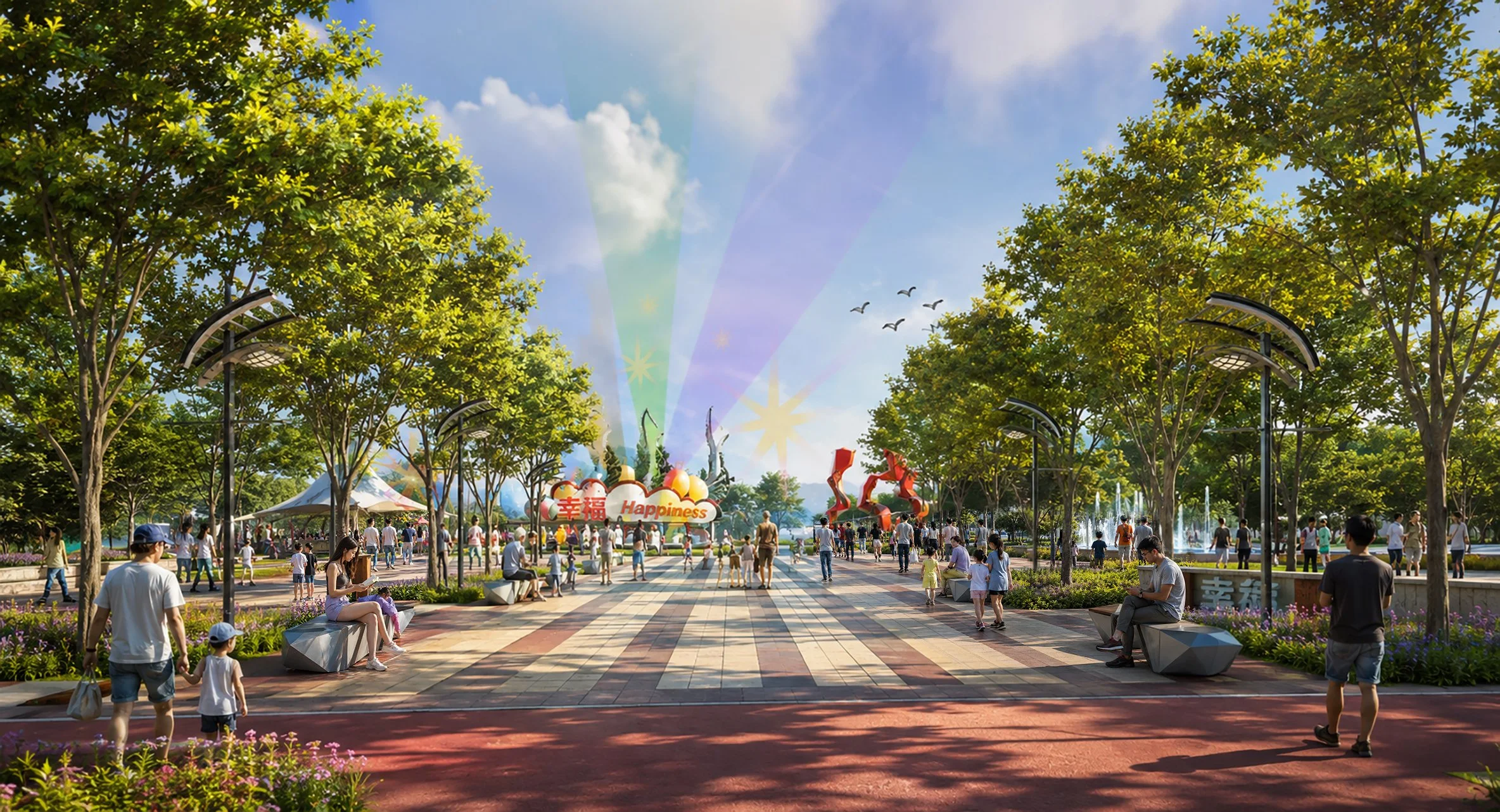
At the civic centre of the site, the spine widens into a grand ceremonial axis designed to absorb the full range of Chengdu's public life: weekly markets, seasonal festivals, performances, and daily passage. Arc-shaped street lights define the edges overhead while a sculptural gateway anchored by a bold 幸福 / Happiness landmark gives the space its civic identity. The strategy here addresses a specific risk in large public parks — emptiness — by concentrating lighting, flexible paving, water features, and landmark sculpture along the main axis, ensuring the zone reads as purposeful on ordinary days and scales naturally to thousands during events.
The Ribbon Promenade
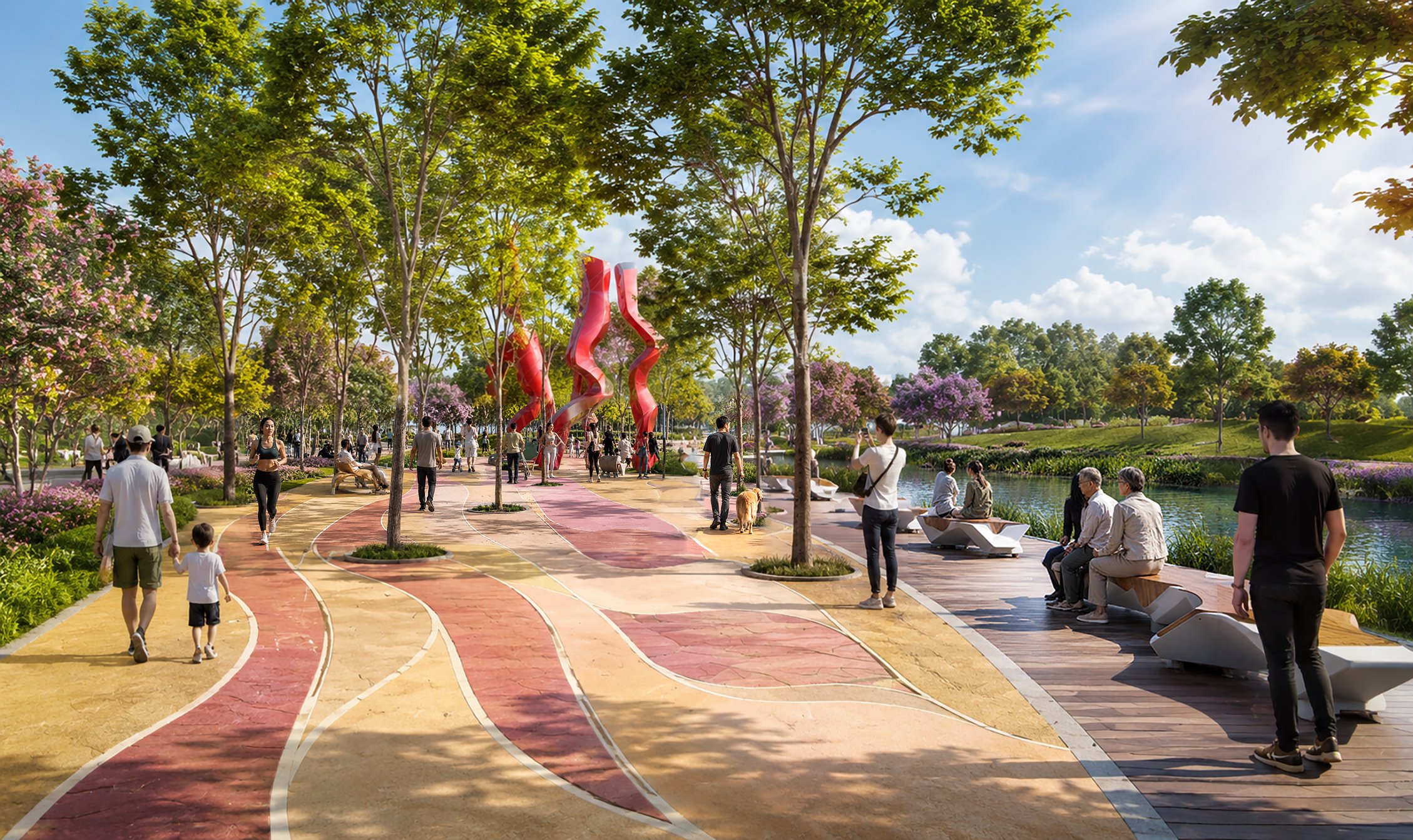
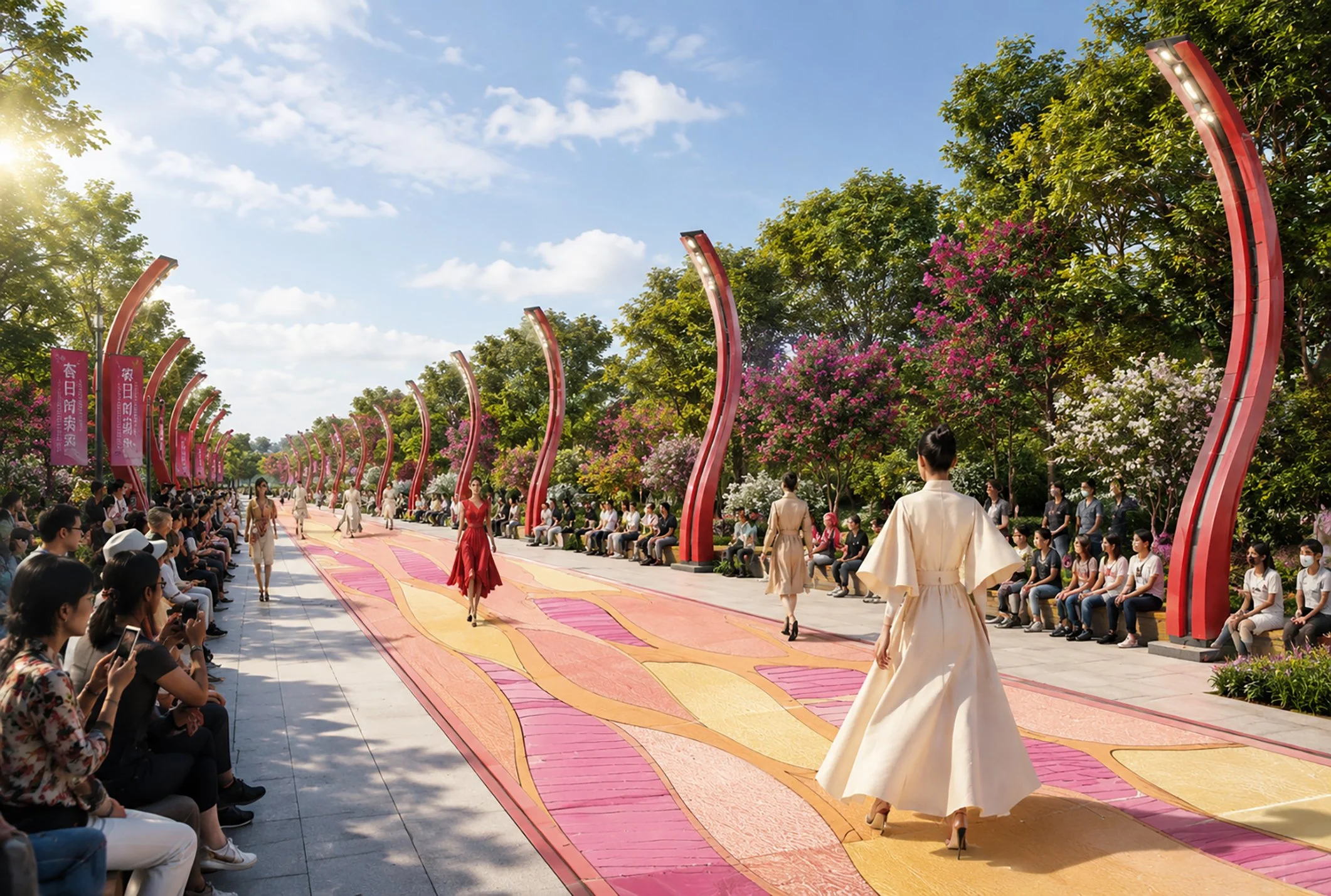
Between these two anchors lies the park's most distinctive spatial sequence: a sinuous promenade with a wave-patterned surface in flowing reds, oranges, and warm yellows, flanked by flowering trees in deep pink and lavender and punctuated by tall twisting ribbon sculptural lighting that serve as both landmark and public art. A boardwalks and seating runs alongside, offering a quieter counterpoint to the energy of the promenade. The same path that hosts a fashion show on a Saturday afternoon becomes a contemplative walk on a Tuesday morning. Adaptability is the core strategy of this zone, where spatial quality and planting richness are sufficient to make the space worth visiting regardless of what is happening.
CHD Park makes a broader argument through the deliberate contrast between site and proposal. The brownfield condition is not treated as a constraint but as the central justification for the design's ambition, a city that can remediate degraded urban land at this scale, returning it to generous public green space, is making a statement about its values. The park proposes that public landscape is not a supplement to urban development but a precondition for it: the kind of place that raises the quality of everything around it, activates adjacent development, and gives a neighbourhood its reason to exist.