Experience of Motion.
Main Building Movieland.
Location: Lido, Bogor, Indonesia
Area: 6,500 sqm
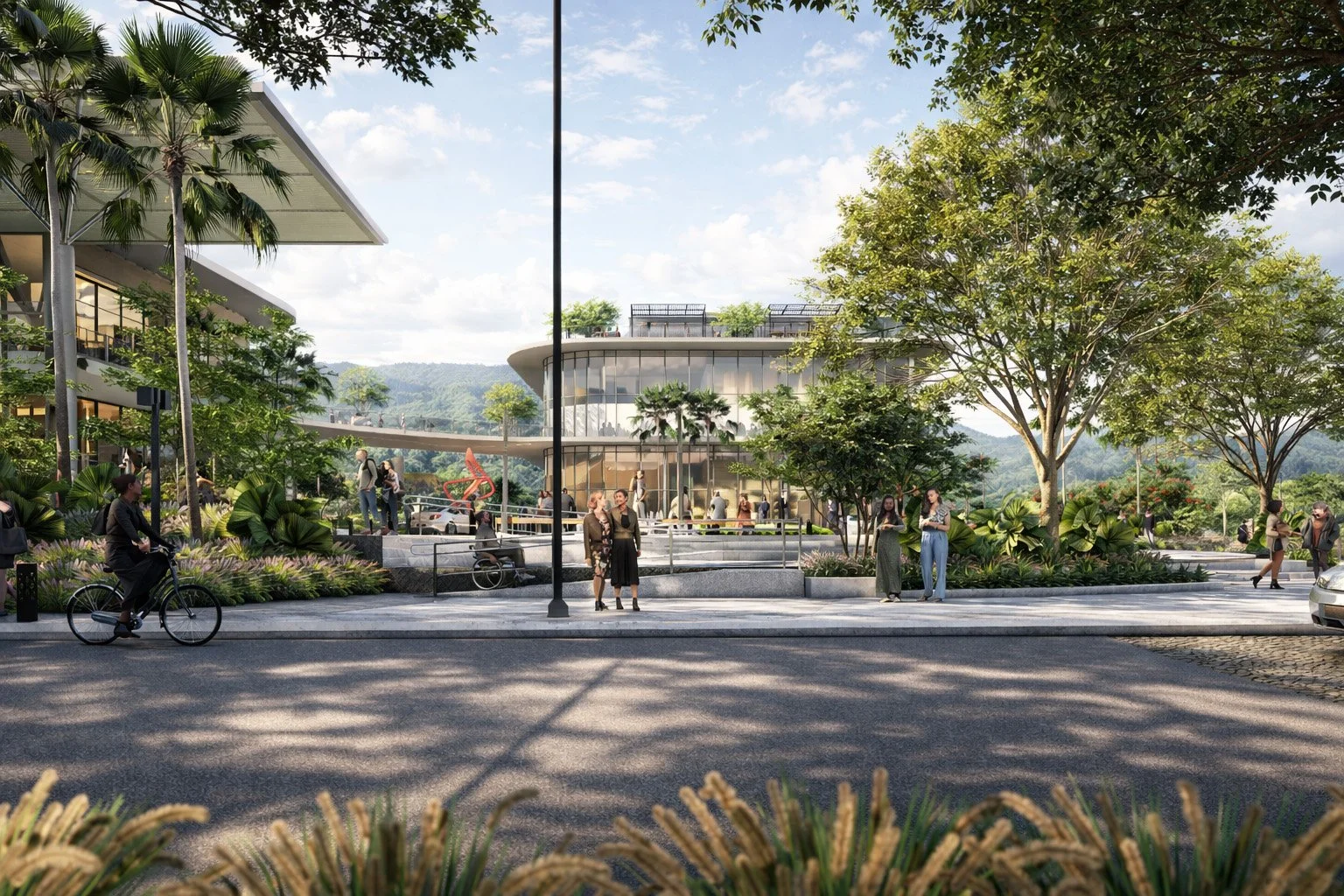
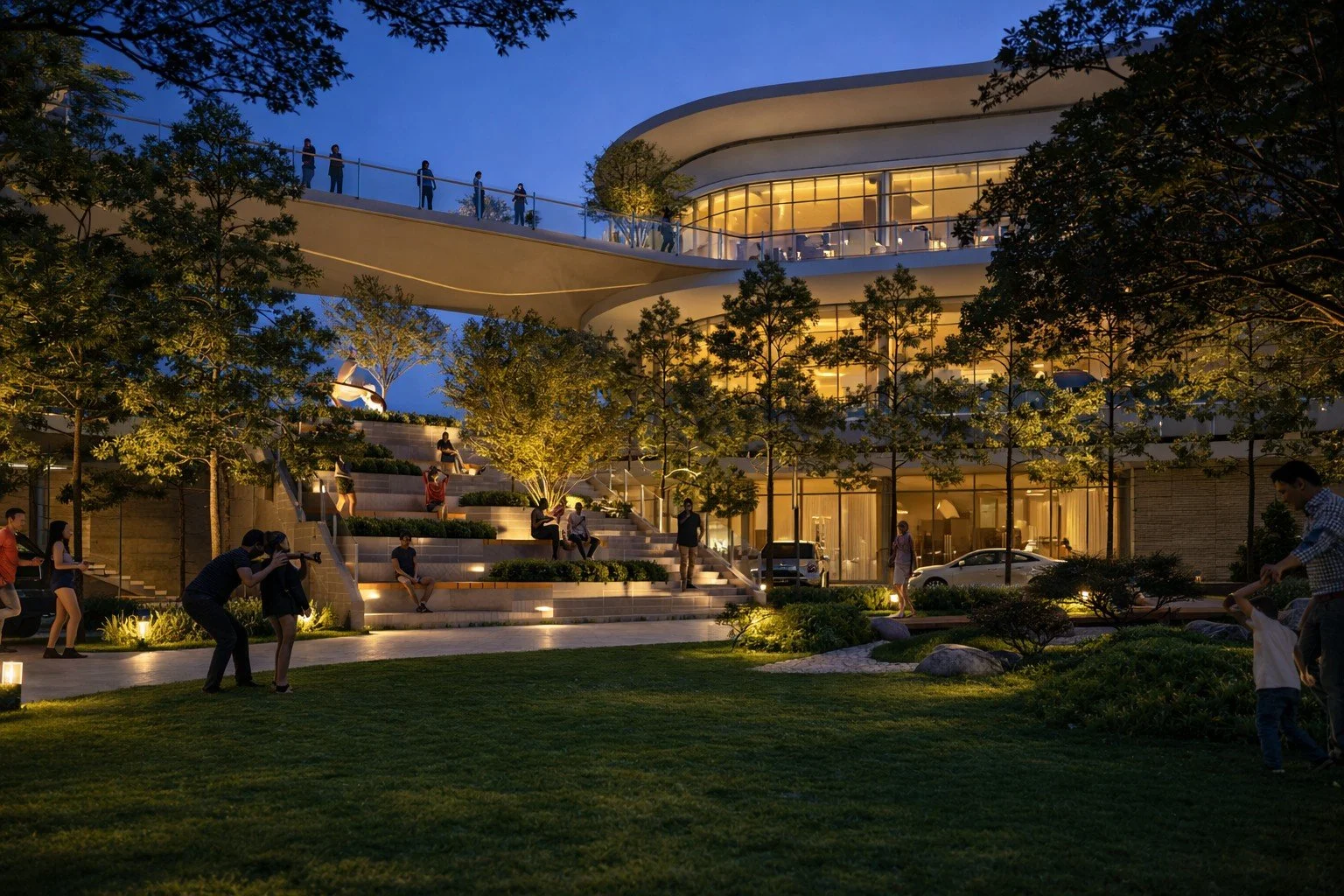
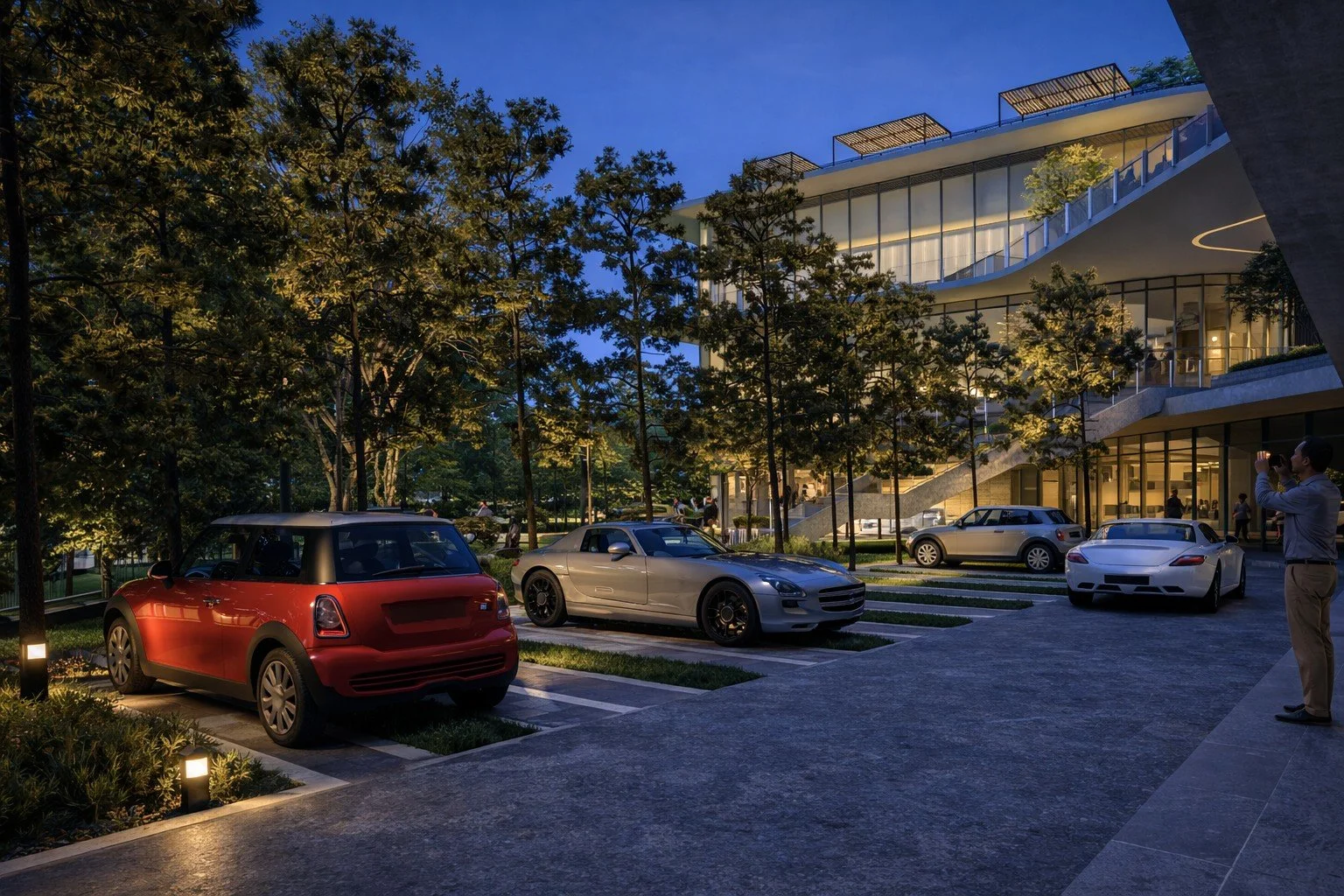
A creative production environment designed to support work, movement, and informal gathering within a landscape setting. The project required a spatial system that could accommodate dynamic use patterns while maintaining environmental performance in a tropical climate. CONIFER was engaged as landscape design consultant from concept through detailed drawings.
Core Constraints
Program variability: space must support work, circulation, and informal use. Climate: high rainfall and humidity affecting usability. Site condition: open land requiring spatial definition without overbuilding. User behavior: unpredictable movement patterns across the site.
Design Strategy
The project was structured around two primary systems:
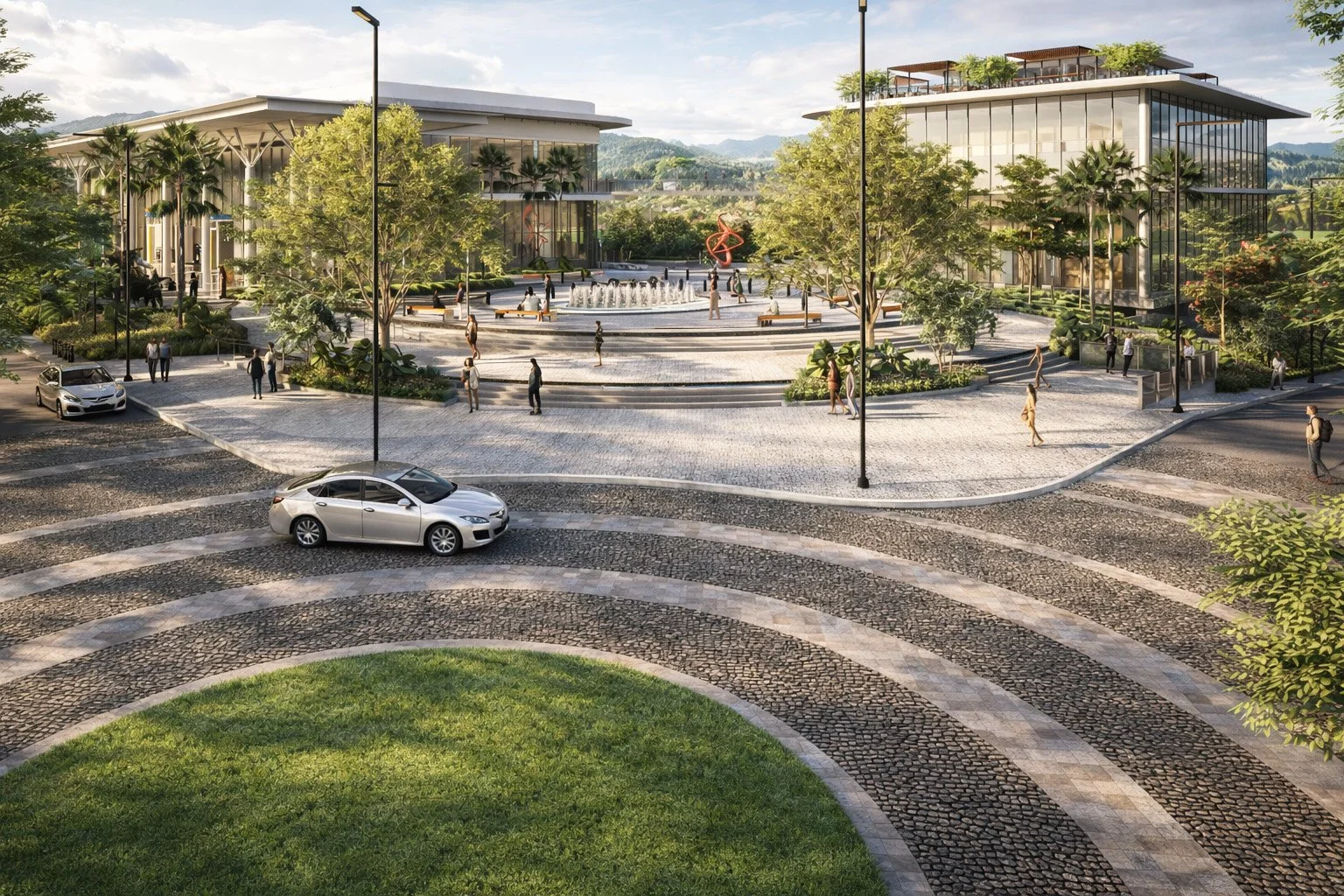
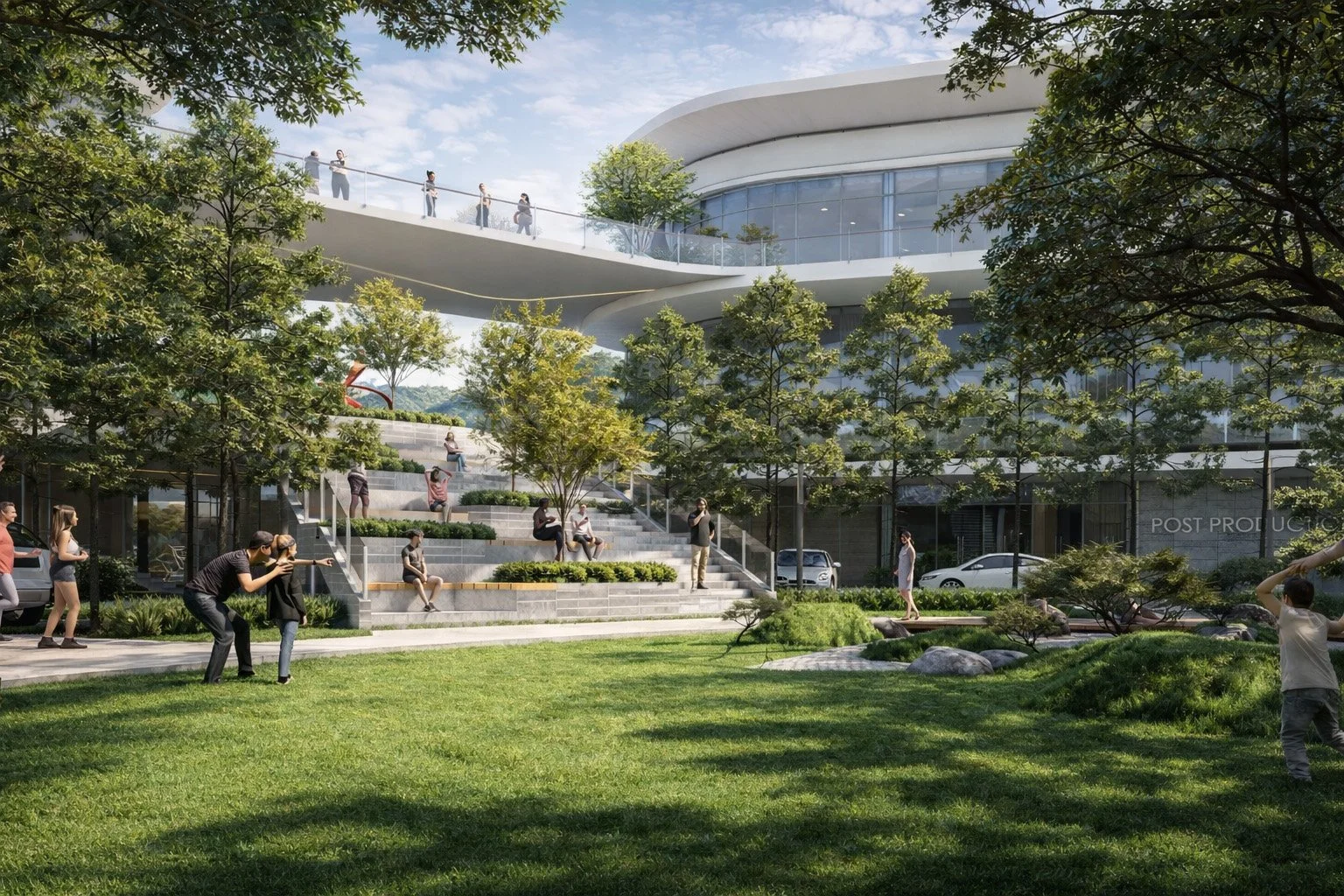
1. Spatial Flow System. Instead of fixed zoning, the landscape is organized through movement-based logic. Circulation paths follow natural desire lines. Open zones allow flexible occupation. Spatial hierarchy defined through density, not walls. This allows the site to adapt to changing use conditions.
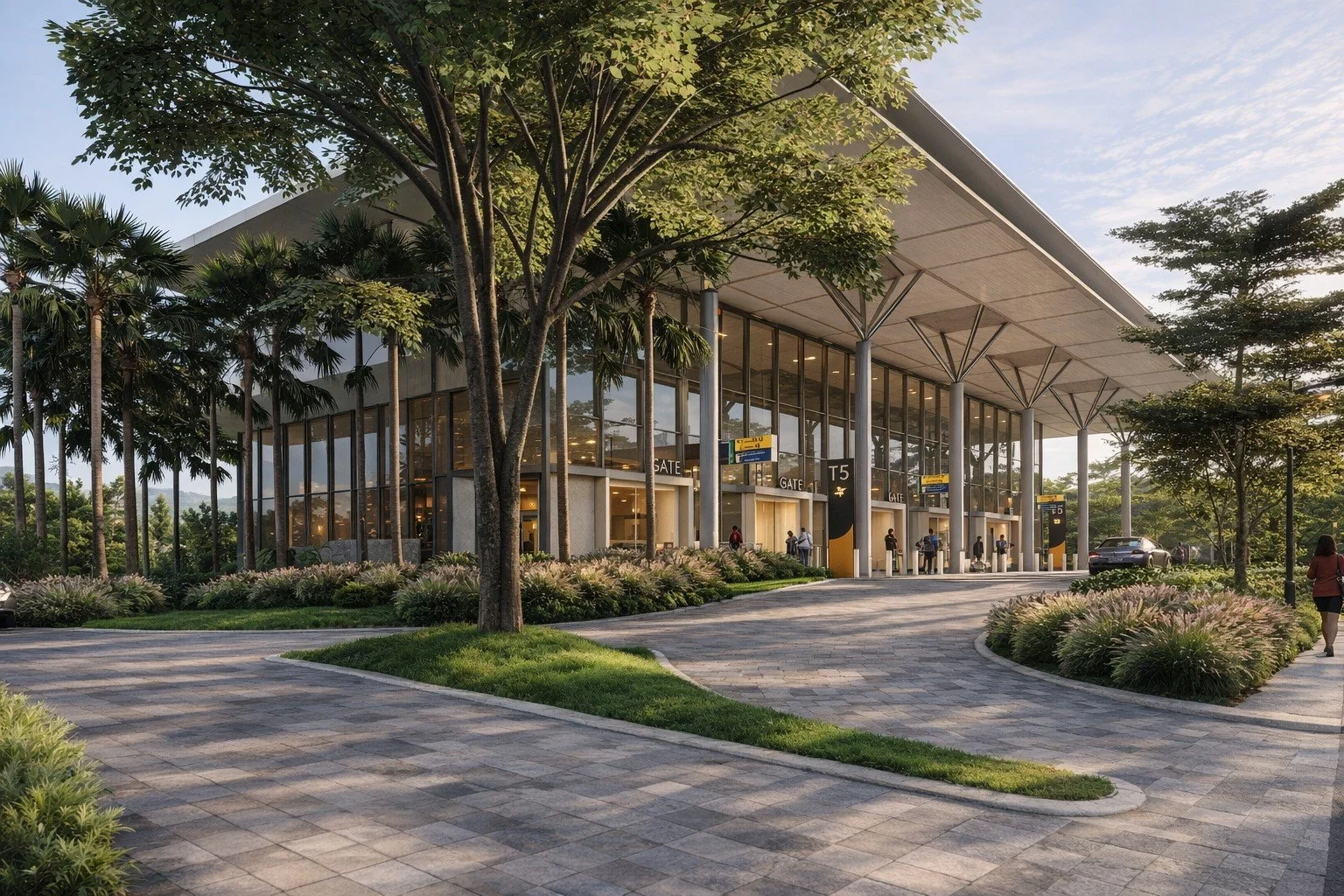
2. Environmental Buffer System. Planting and landform are used to regulate microclimate and comfort. Vegetation creates shaded working areas. Planting density filters views and defines zones. Ground treatment reduces heat gain and improves usability. This improves comfort without reliance on built structures.
Spatial Organization
The site operates as a continuous landscape field, not segmented zones. Primary paths connect key program areas n- Secondary spaces support pause and interaction. Transitional zones allow overlap between uses. This creates flexibility while maintaining clarity.
Technical Development
The design was developed in close coordination with the broader project team: Collaboration with client’s project manager for scope alignment and decision-making. Integration with architectural layout and spatial intent. Coordination with structural systems affecting levels and buildability. Alignment with MEP requirements to ensure seamless infrastructure integration.
What This Project Solves
Creative environments often fail because spaces are over-designed and inflexible, circulation is forced rather than natural, climate comfort is ignored. This project resolves those issues by: organizing space through movement logic, using landscape to define zones instead of construction, integrating environmental performance into spatial design
Result: Flexible use across different activities, Improved thermal comfort in outdoor spaces, Clear circulation without rigid boundaries, Reduced reliance on built infrastructure. Most importantly: The landscape supports activity without constraining it.