
Carrying Landscape Lessons Across Cities: From Shanghai to Indonesia
Years spent living in Shanghai from 2012 to 2019, shaped how public space is understood and used. Parks were not occasional destinations. They were part of everyday movement and routine. Repeated visits, across seasons and times of day, revealed how landscapes perform when they are truly embedded in city life. One park in particular continues to inform how public landscape is approached today: Houtan Park.
Now living and working in Indonesia, those experiences feel increasingly relevant. Comparing how parks function across cities sharpens what endures beyond style or context.
A Park Designed to Work
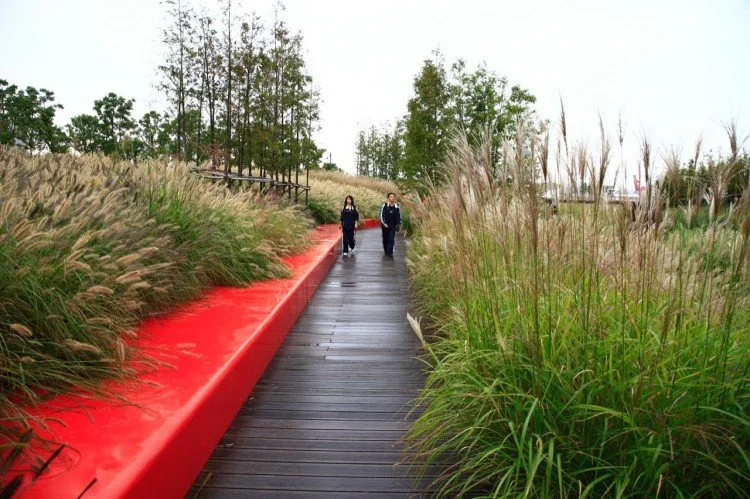
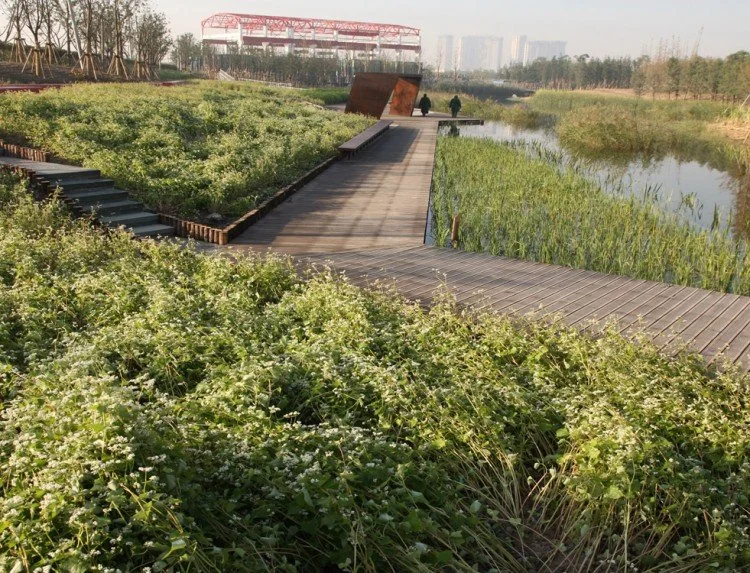
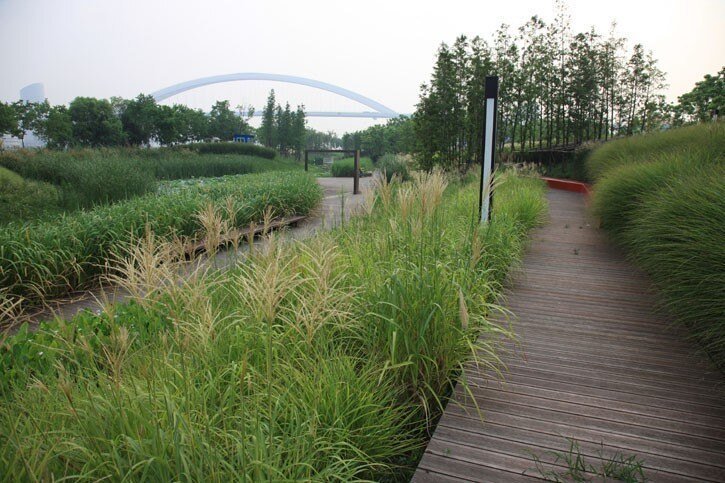
Houtan Park occupies former industrial land along the Huangpu River. Its primary ambition is not visual spectacle, but performance. The landscape filters polluted river water, manages flooding, and restores ecological systems while remaining fully accessible to the public. What makes the park compelling is the visibility of those systems. Wetlands, terraced planting, and water movement are not hidden or fenced off. They are part of the walking experience. The landscape explains itself through use. This clarity changes how people engage with the space. Movement slows. Observation increases. The park communicates function without signage or instruction.
Daily Use as a Measure of Success
Houtan Park feels ordinary to its users, and that ordinariness is its strength. People pass through it on the way to work. Older residents exercise there daily. Families occupy edges near wetlands without excessive control or restriction. The park is designed for repetition rather than novelty. Landscapes designed for everyday use age differently. They accumulate character instead of appearing worn. They accept pressure without losing structure.
Viewing Indonesia Through This Lens
Living in Indonesia now, many public parks appear visually neat and carefully maintained, but tightly managed. Lawns are protected. Edges are controlled. Ecological systems, when present, are often concealed or simplified. Houtan Park offers a counterpoint. It demonstrates that public landscapes can be productive, open, and robust at the same time. Environmental performance does not need to be separated from public life. Integrating the two often strengthens both.
What This Means for CONIFER’s Work
Experiences across cities and climates continue to inform Conifer’s approach to landscape architecture:
Landscape should perform environmental work visibly, not invisibly
Parks designed for daily use develop long-term resilience
Ecological systems can be functional, accessible, and legible
Trusting users often leads to more durable public spaces
Houtan Park was not designed to impress at first glance. It was designed to function over decades. Living and working in Indonesia today, that lesson feels increasingly urgent.
Good landscape architecture travels well, not because it looks the same everywhere, but because it remains grounded in use, ecology, and time.