Infrastructure Reclaimed: What West Bund Park Revealed About Urban Continuity
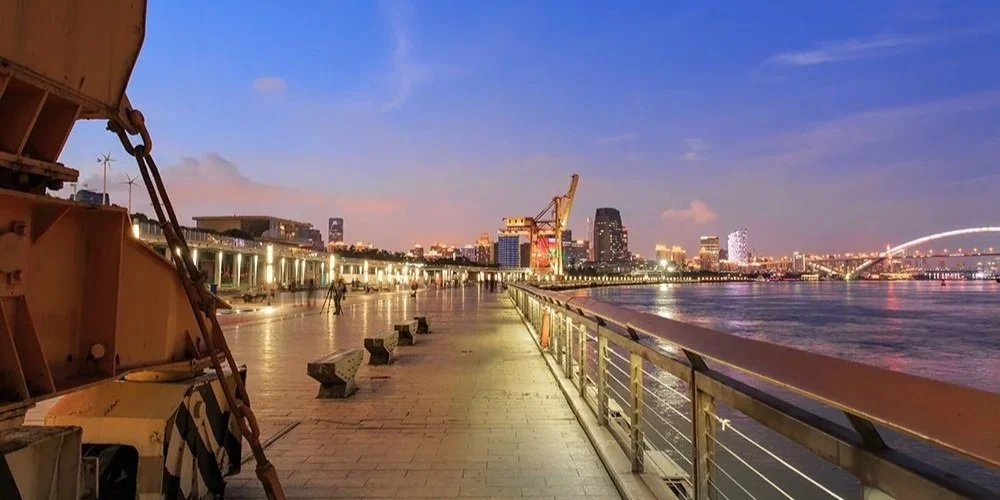
Time spent living in Shanghai offered a close view of how large cities evolve without erasing themselves. Among the many public landscapes visited repeatedly, Longteng Avenue Park or known as West Bund stood out for a different reason than scale or ecology. Its strength lies in continuity. The park occupies a former industrial and infrastructural corridor along the Huangpu River. Instead of clearing that past, the design works with it. Rail lines, concrete structures, and industrial remnants remain visible and legible. The landscape does not disguise history. It edits it.
A Linear Park That Prioritizes Movement
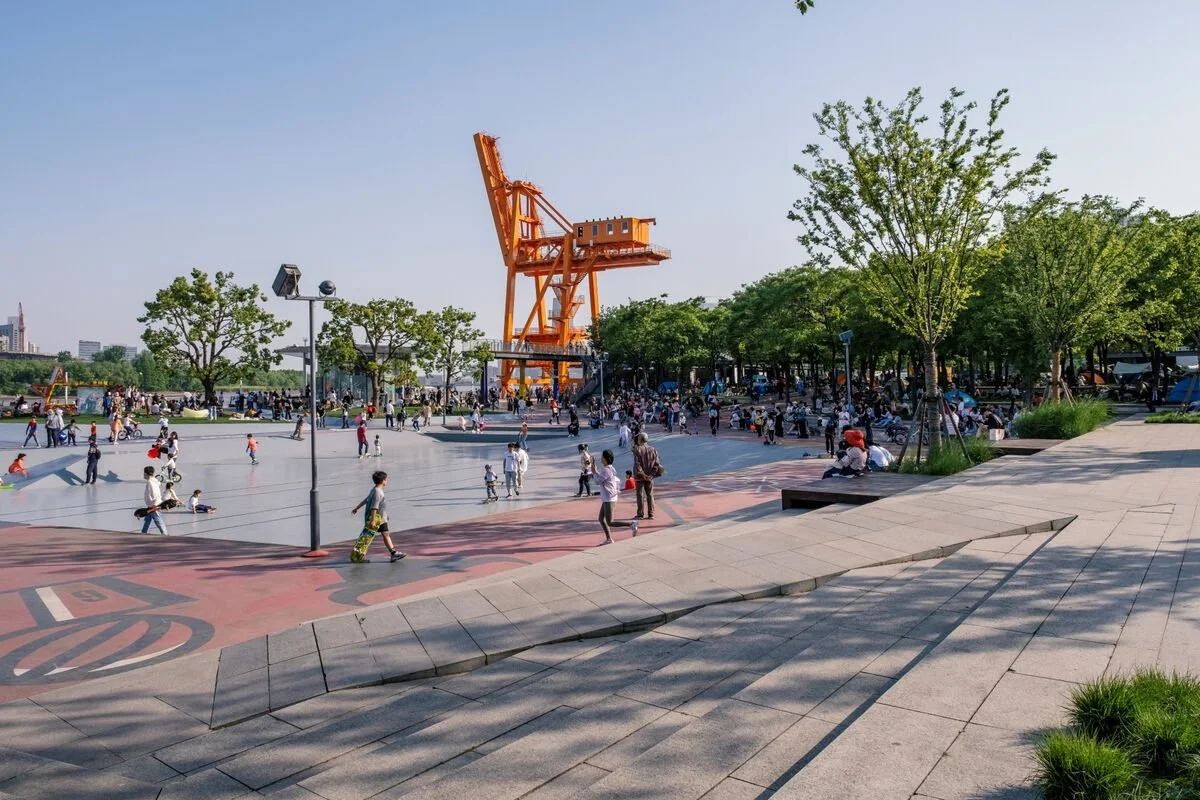
West Bund Park is not a destination park. It is a connective one. It is designed to be passed through, not paused in endlessly. Cyclists, walkers, runners, and commuters move along it with purpose. Seating is present but restrained. Views unfold gradually rather than theatrically. This clarity of intent matters. The park understands its role in the city. It links neighborhoods, stitches together fragmented riverfronts, and extends daily movement rather than interrupting it. Landscape here operates as urban infrastructure.
Letting the City Show Through
One of the most striking qualities of the park is its refusal to over-soften. Hard edges remain. Industrial textures are not concealed by excessive planting. Greenery is carefully placed to frame, cool, and soften without erasing structure. This approach creates honesty. Users understand where the park came from and how it fits into the larger city. The experience feels grounded rather than curated. It suggests that comfort does not require removing all traces of hardness, only balancing them.
Lessons That Travel
West Bund Park offers a useful counterpoint. Many urban parks aim to fully separate themselves from surrounding infrastructure. Roads, rail, and utilities are screened or ignored. West Bund Park suggests another approach. Infrastructure can be absorbed into landscape design rather than hidden from it. When movement systems, history, and public space are aligned, parks become more resilient and more relevant to daily life.
What This Means for CONIFER’s Work
West Bund Park reinforces several principles that continue to guide CONIFER’s approach to linear and urban landscapes:
Not all parks need to be destinations; some need to connect
Infrastructure can be a design asset, not a liability
Movement is a legitimate primary program
Retaining traces of history strengthens identity
The park does not rely on novelty or spectacle. It works quietly, consistently, and at city scale. That restraint is its success. Good landscape architecture does not always ask people to stop. Sometimes, its role is simply to let the city move better through it.