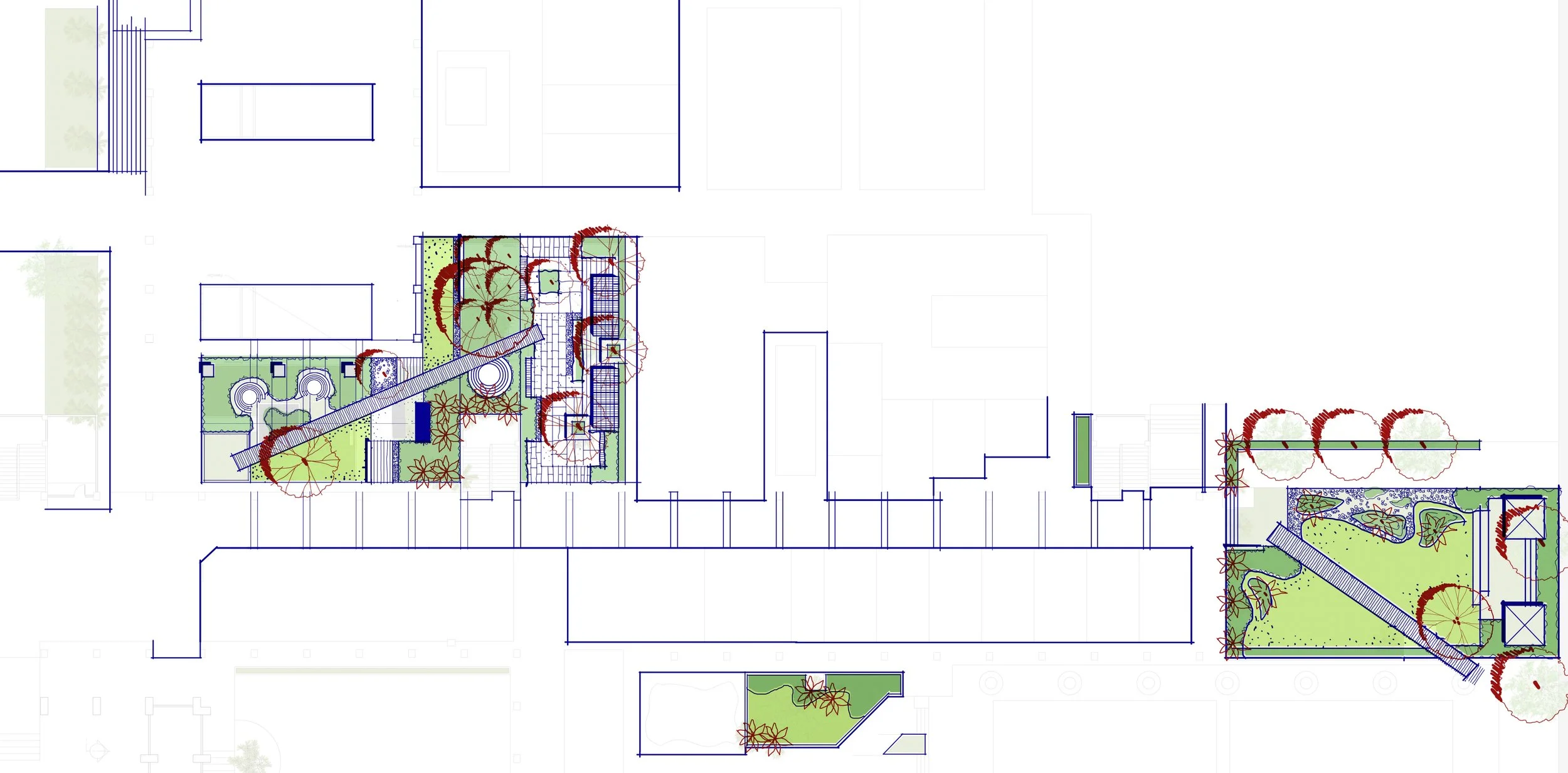
AJ Jakarta Campus.
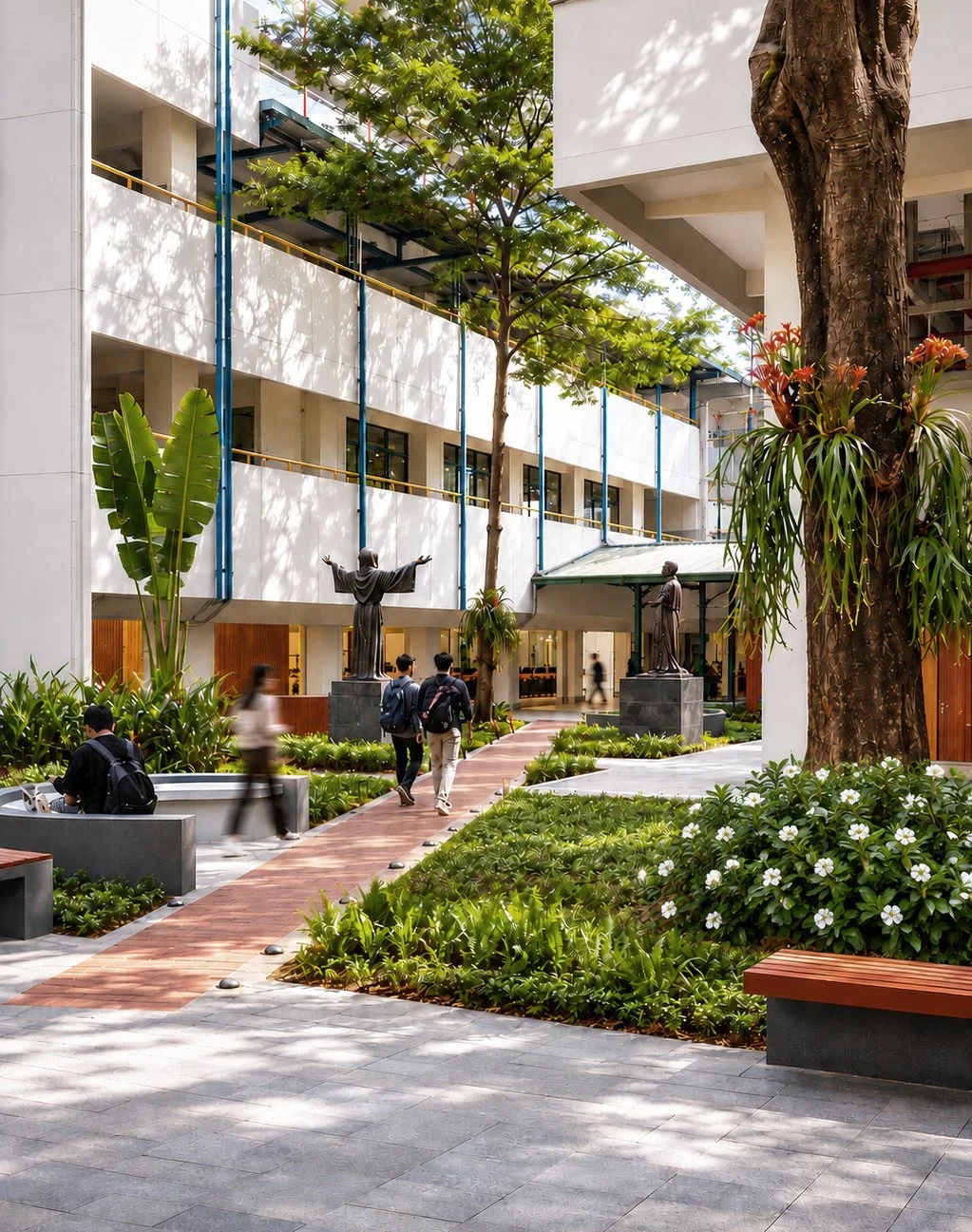
Location: Jakarta, Indonesia
Facade & Interior Architect: ARSA designlab
Contractor: PT. CPI
Completion: 2025
Scope: Landscape Design
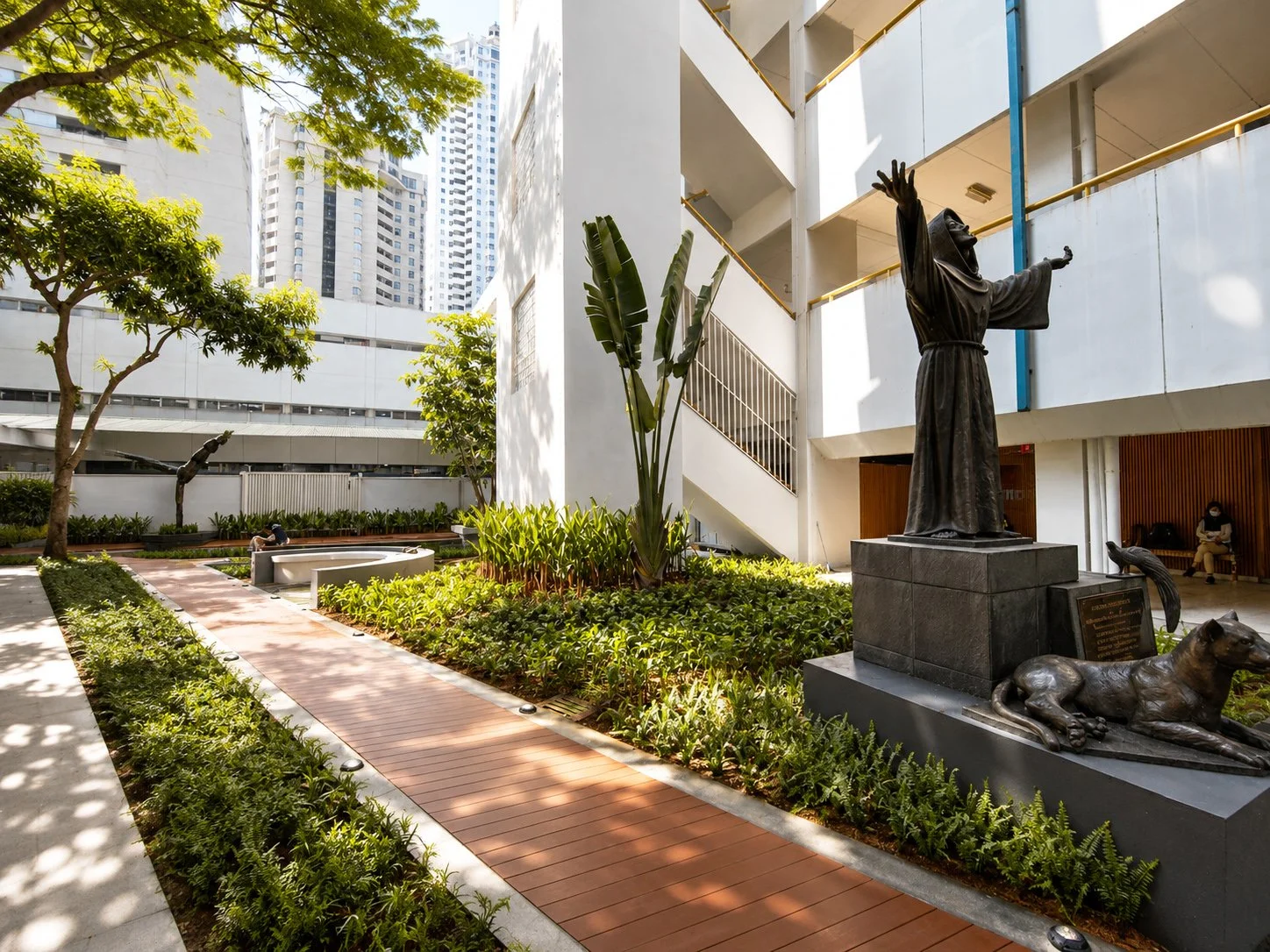
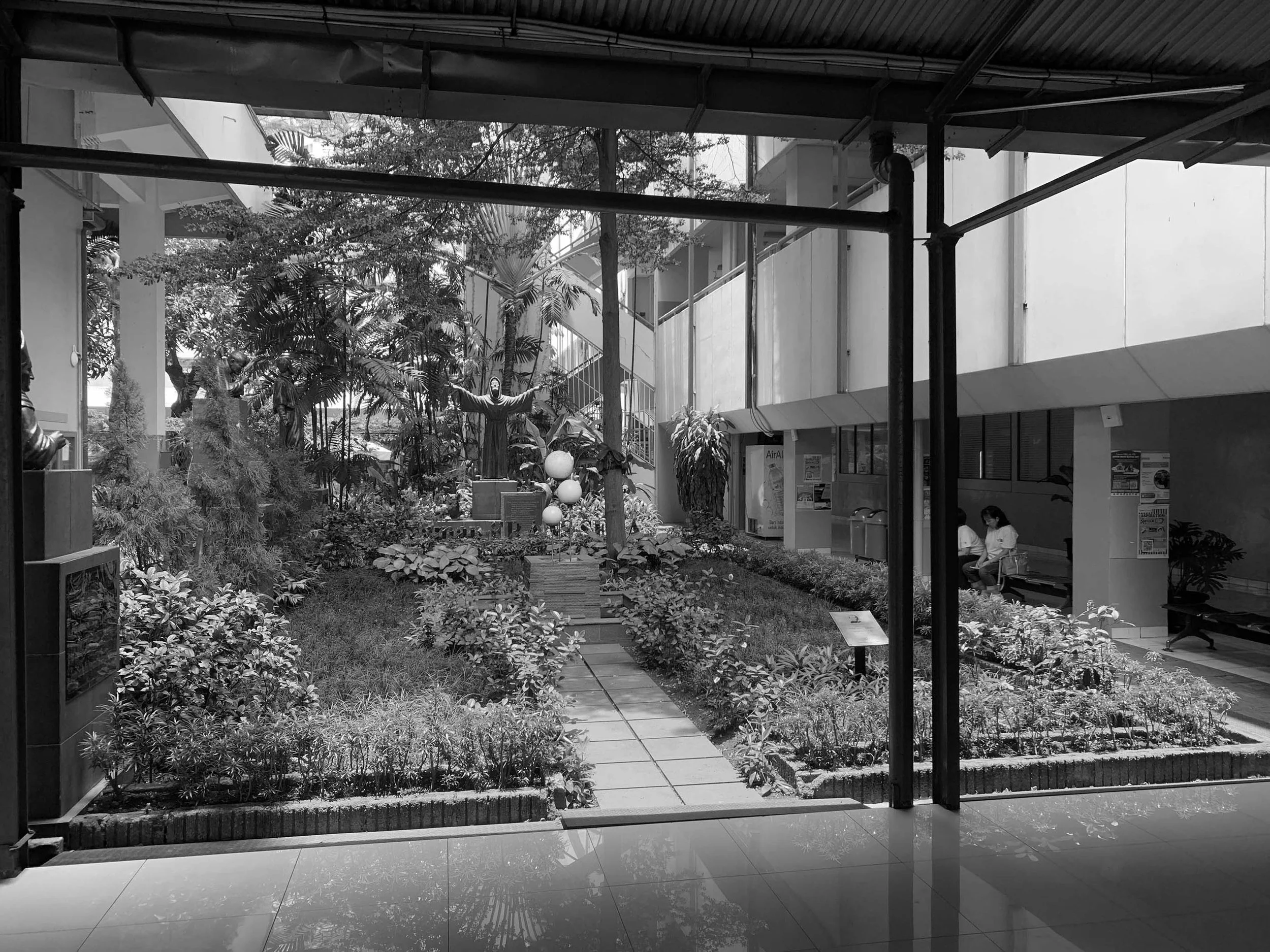
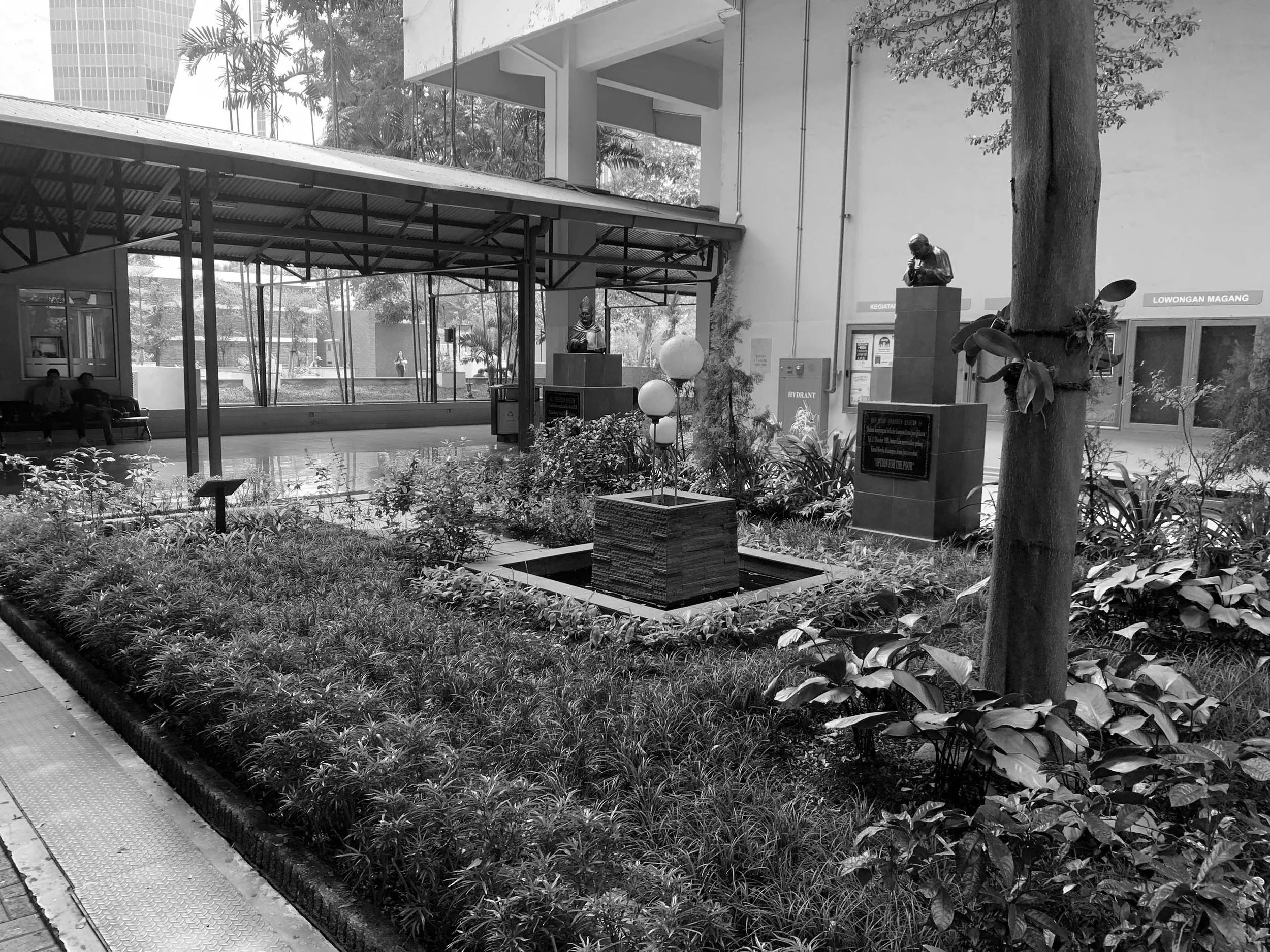
Situated within Jakarta's dense urban fabric, AJ University's campus is home to a number of existing pocket parks, small, scattered green spaces that, in their current condition, remain disconnected from one another. Each exists in isolation, limiting their collective impact on the campus experience and failing to form a coherent green identity for the university.
Our approach begins with connection. Rather than designing from scratch, we work with what is already there, identifying each dispersed green pocket and drawing them together through a network of green corridors and planted pathways. This connective framework transforms a fragmented collection of gardens into a unified, navigable green system that threads through the entire campus.
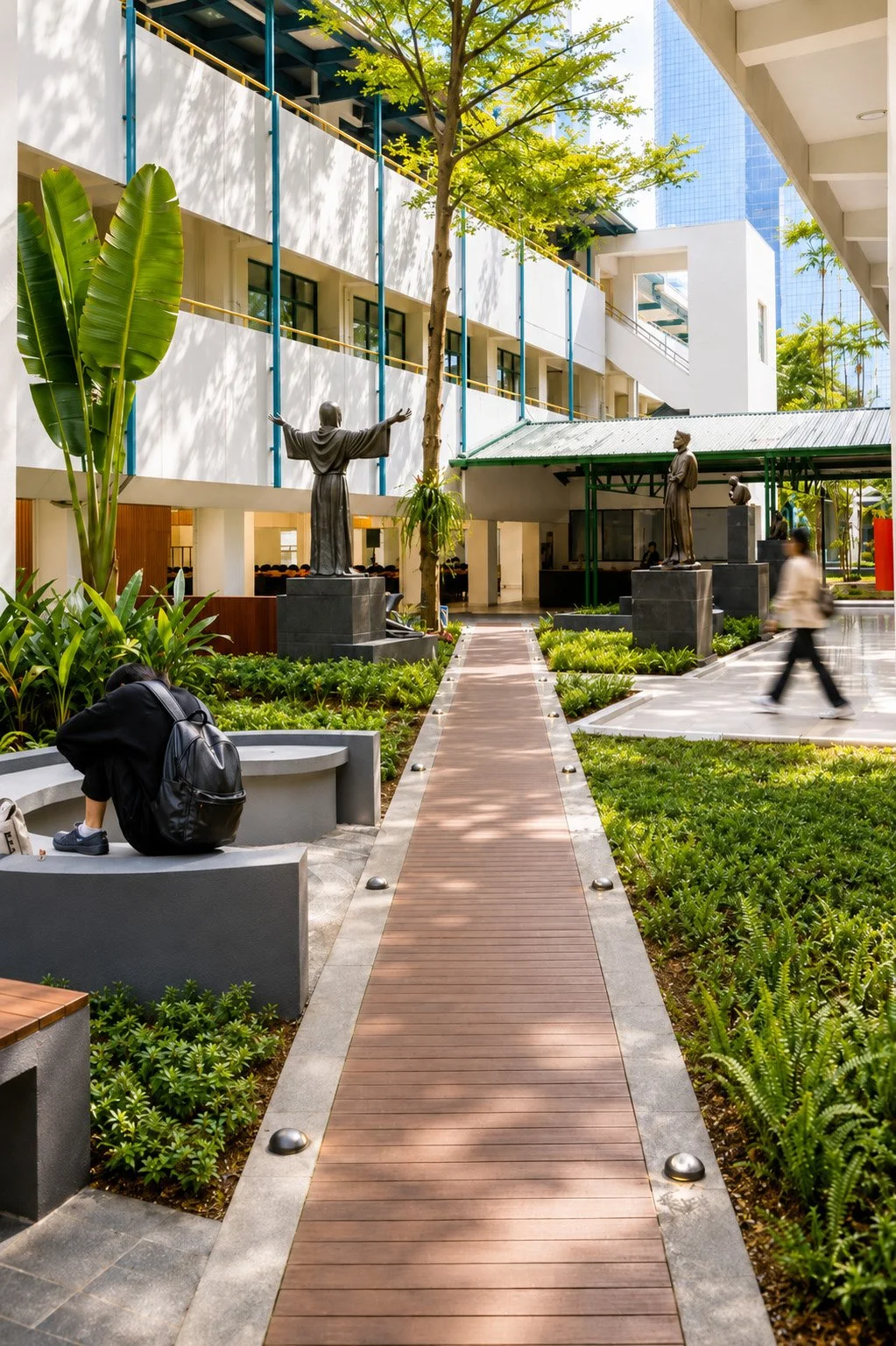
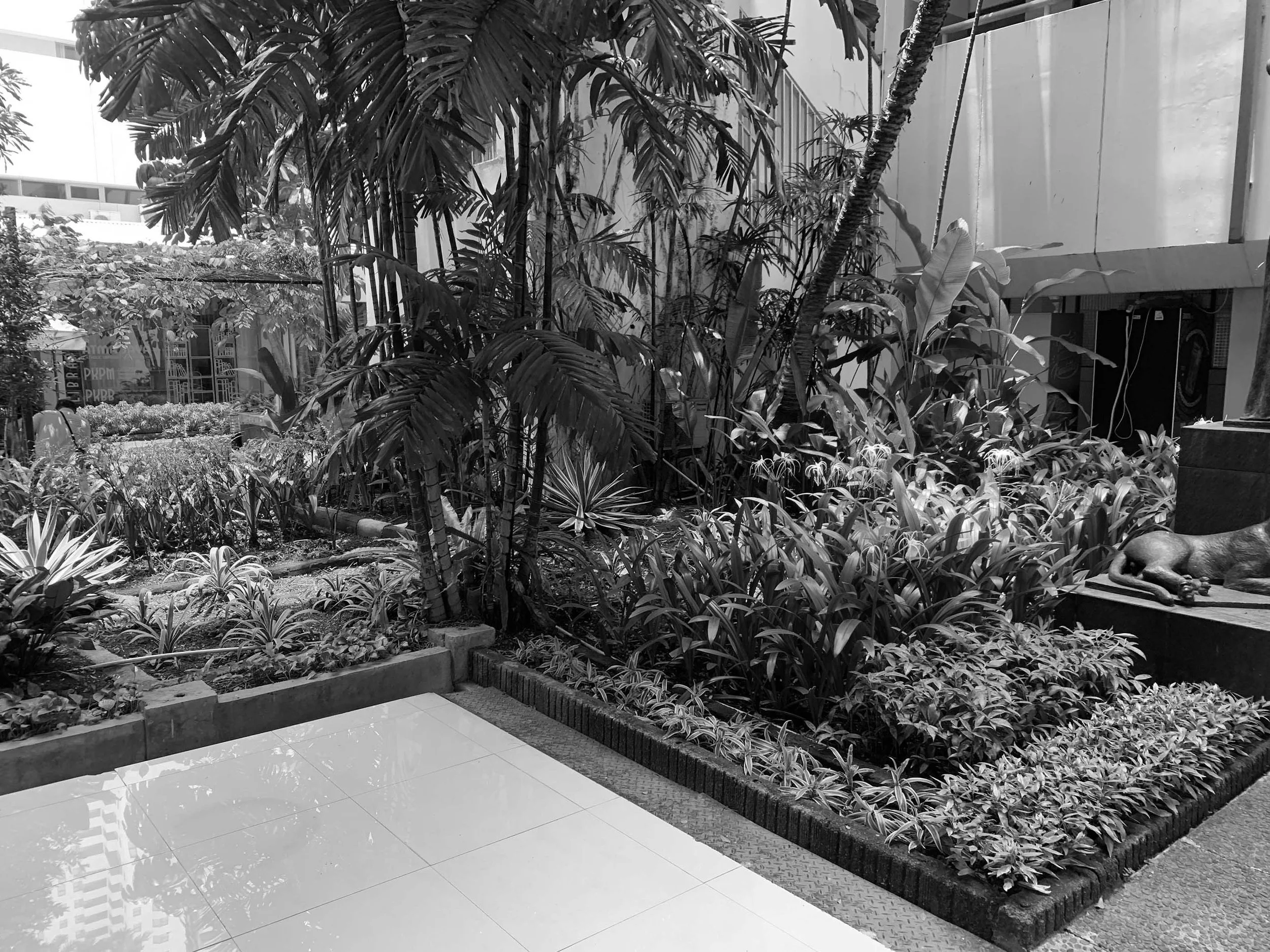
Within this network, the design introduces a layered planting strategy, combining ground cover, mid-storey shrubs, and canopy trees, to create a lush, naturally shaded atmosphere throughout. Pergola-lined walkways reinforce the connections between spaces, ensuring that movement across the campus is always accompanied by greenery. Native and low-maintenance species are selected to sustain year-round vibrancy while supporting local biodiversity and minimising upkeep.
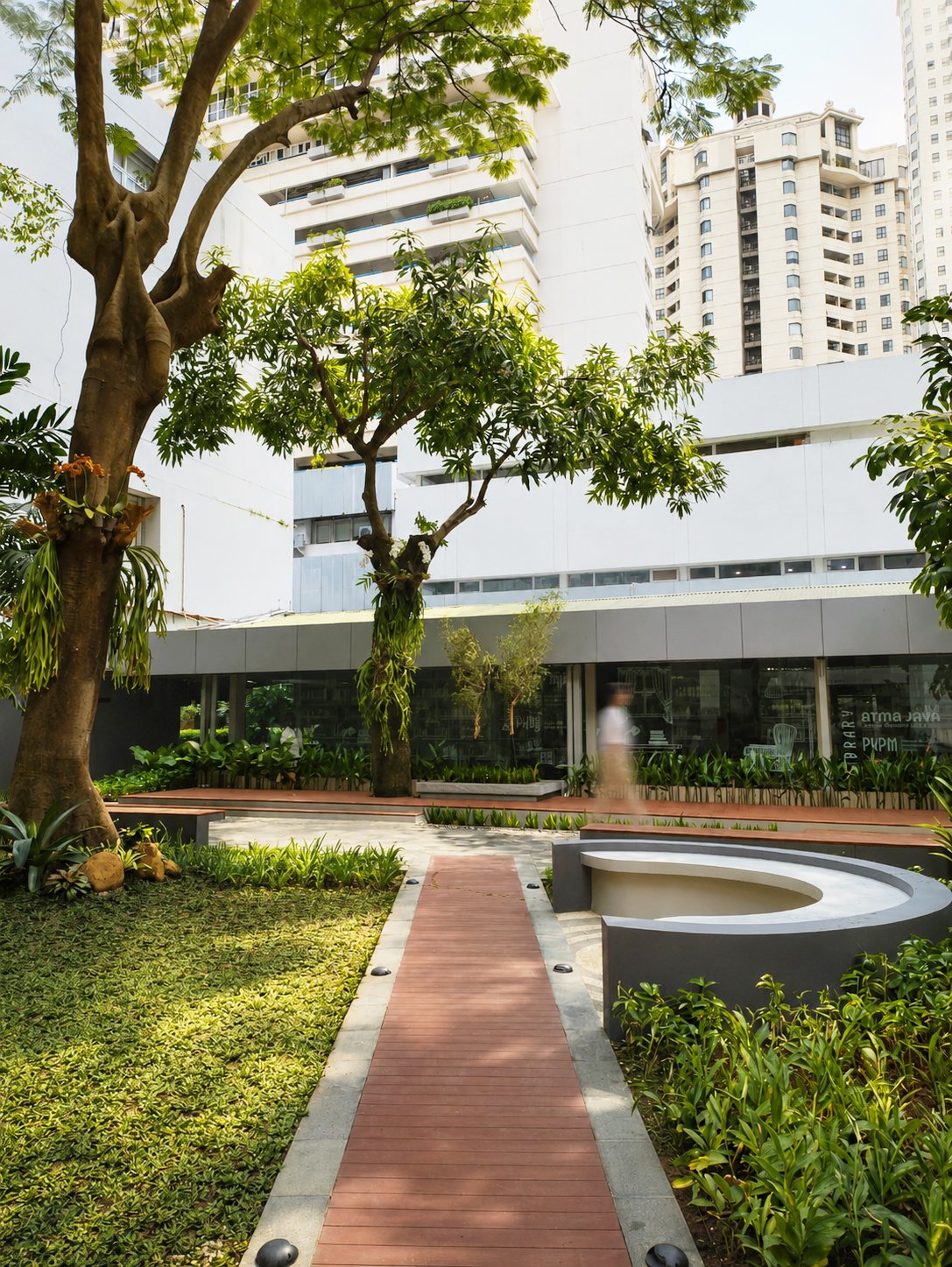
Embedded within each garden node are dedicated learning spaces and pocket seating areas , informal, shaded spots designed to encourage students and faculty to linger, study, and connect with one another in a natural setting. These spaces position the gardens not merely as visual amenities, but as active extensions of campus life. Complementing this, a network of rain gardens is integrated throughout to harvest stormwater, cool the microclimate, and provide ecological habitats for pollinators and native fauna.
The result is a campus transformed — from a series of isolated green fragments into a living, interconnected landscape that nurtures well-being, supports learning, and builds ecological resilience at the heart of the city.